search

 God’s Promises: This autumn, we’re learning alongside the youngest among us in Church School. We look at the early characters of the Hebrew scriptures and how God’s promises bring hope for the future, with guidelines on how to love God and love others in ways that bring life and hope to all.
I saw a meme the other day that said, “y’all, I have terrible news: the ‘you’ll feel better if you exercise’ people were right”.
And boy did that resonate with me. It made me think about how when we’re dealing with what feels like an intractable problem, we often assume that the solution to the problem must be similarly complex or arduous. The idea that something simple could help can even feel insulting, like it’s dismissive of the magnitude of our problem!
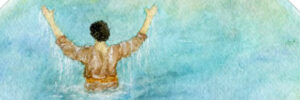
I wonder if that’s what’s going on for Naaman, a man suffering from a really bad skin disease, when he goes on a 130-mile journey from Damascus to Samaria, bringing obscene amounts of money with him, only to be told that he simply needs to take a few baths in the Jordan river to be healed. He’s pretty indignant until his servant challenges him ‘hey, if you’d been told you had to do something really hard and complicated to be healed you would’ve done it, why are you complaining about doing something easy?’. Naaman relents, washes, and is healed.
Like Naaman, we can be skeptical when God’s methods don’t line up with our expectations, even when they lead to the same outcome. In corporate/leadership speak, this is referred to as the mistake of ‘marrying’ the method instead of the mission. In the context of our faith, this is called being human, and y’all I have terrible (but actually great) news: the ‘trust in the lord with all your heart and lean not on your own understanding’ psalmist was right. If we trust God to work through us, even in unexpected ways, we’ll accomplish more towards God’s mission than we can ask or even imagine.
Join us in worship at 11am Sunday morning in the Sanctuary and on YouTube to wonder, pray, sing, and trust together.
in faith,
Amy
image credit: “Naaman’s healing” by Melissa Ellen Fink