search

 God’s Promises: This autumn, we’re learning alongside the youngest among us in Church School. We look at the early characters of the Hebrew scriptures and how God’s promises bring hope for the future, with guidelines on how to love God and love others in ways that bring life and hope to all.
My study Bible introduces the context for the prophet Micah’s times as: dizzying events, expansion of the city fueled by immigrants, and an international situation made unstable by an aggressive superpower. Sound familiar?
Like any good prophet, Micah is calling his people into account, for their relationship with God, with one another and the world around them. He interprets their oppression by an outsized foreign power as payment for how they’ve gotten out of step with God. The seven short chapters of his book alternate between castigating judgment and eternal hope.
And he calls the people back to basics with some of our favorite verses:
With what should I approach the Lord
and bow down before God on high?
Should I come before them with entirely burned offerings,
with year-old calves?
Will the Lord be pleased with thousands of rams,
with many torrents of oil?
Should I give my oldest child for my crime;
the fruit of my body for the sin of my spirit?
God has told you, human one, what is good and
what the Lord requires from you:
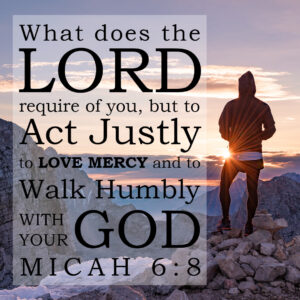
to do justice, embrace faithful love, and walk humbly with your God.
(Micah 6:6-8)
As we re-calibrate our own lives to the political and hoped-for cultural about-face of last week’s elections, I invite us to consider again our own spiritual and ethical basics. How are we doing justice, embracing faithful love (otherwise translated as “mercy” or “kindness”), and walking humbly with God? What does it look like and how we are we keeping it as a steady beat in the rhythm of our lives?
I look forward to re-joining you Sunday at 11am in worship, followed by lunch and our autumn all-parish meeting, hearing about all the good ways God is blessing us and urging us forward in faith.
Gratefully,
Kent